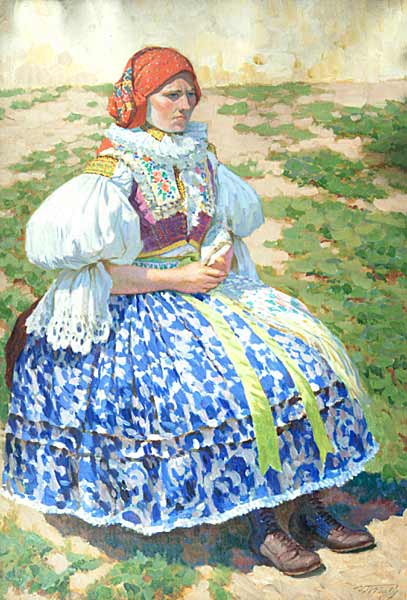
Textile Arts
Traditional Czech Embroidery Techniques
Counted cross-stitch, drawn-thread work, and pattern darning on linen — the stitching methods that define South Moravian and Bohemian folk dress.
Read more
Regional techniques, materials, and the cultural context behind folk art practices that have shaped communities across Bohemia, Moravia, and Silesia.
Craft Documentation
Each craft below represents a distinct regional practice — rooted in local materials, community calendars, and historical trade routes that connected Czech villages to broader European markets.
Textile Arts
Counted cross-stitch, drawn-thread work, and pattern darning on linen — the stitching methods that define South Moravian and Bohemian folk dress.
Read more
Glass Craft
From the Krkonoše furnaces of the 14th century to the Nový Bor cutting workshops, how sand, potash, and skilled hands built a world-export industry.
Read more
Seasonal Craft
Wax-resist dyeing, etching, and appliqué on blown eggshells — a spring ritual craft with documented regional variants across twelve Czech counties.
Read moreFolk art encodes climate, trade, faith, and social structure in motif and material. These pages document techniques as they existed and as they are currently practised.
Context & Reference
Moravia
The villages around Strážnice, Velká nad Veličkou, and Hluk have maintained some of the densest concentrations of living craft knowledge in Central Europe. Embroidery patterns here use eight-point star motifs and natural indigo dyes derived from local woad cultivation that declined only in the early 20th century.
The Strážnice International Folklore Festival, held since 1946, remains a primary venue where active practitioners demonstrate techniques to younger generations in an open-air setting.
Bohemia
Northern and western Bohemia developed two distinct craft specialisations that shaped regional economies for centuries. The Šumava foothills produced bobbin lace — particularly around Kraslice (the town, not the eggs) and Vamberk — while the Jizera Mountains harboured glassworks supplied with abundant fuelwood and local silica sands.
Both crafts relied on cottage-industry structures: glass beads were assembled at home, lace was measured in metres and sold through merchant networks reaching as far as Spain and the Ottoman court.
Materials
Understanding why specific crafts developed in specific regions starts with the materials available locally and the trade routes that supplemented them.
Textiles
Domestic flax cultivation produced the linen ground fabric for almost all embroidery and weaving across Bohemia and Moravia until industrialised cotton imports in the mid-19th century changed the base material while leaving pattern traditions largely intact.
Ceramics
Earthenware production concentrated around Stupava, Beroun, and Kyjov, where accessible red-burning clays and pine-wood kilns made pottery economically viable at village scale. Lead glazes in amber, green, and brown remained standard until cobalt-blue tin glazes from imported Delftware began influencing Czech potters after 1700.
Glass
Bohemian crystal glass — distinct from Venetian soda glass — used potash derived from burned beechwood, combined with local quartz sands and limestone. The resulting harder material took wheel-cutting and engraving far better than its Italian counterpart, making decorative table glass a natural product line from the 17th century onward.